Neruba Billing Engine is an infrastructure for SaaS teams that outgrew simple subscription tooling
Use one connected system for replay-safe ingest, deterministic billing runs, ledger-backed balances, and operator-ready recovery once billing is too important to leave split across provider dashboards, spreadsheets, custom scripts, and fragile handoffs.
Stop splitting ownership across dashboard configuration, one-off webhooks, and fragile hidden logic.
Give finance and support a ledger-backed path for corrections instead of side-channel cleanup.
Keep product, finance, support, and operations on one explainable billing model.
Usually worth a deeper look now
- • billing logic now affects product, finance, and support
- • reruns, corrections, or audit trails are already real work
- • the team needs stronger control than a dashboard-first stack gives
Stay simpler while these are still true
- • simple subscriptions still cover the business cleanly
- • speed to launch matters more than billing control right now
- • no one needs migration, recovery, or reviewer material yet
See the product shape before you open deeper implementation, operations, or trust material.
Inspect shipped projects, scoped keys, ingest, credits, balances, billing reads, and admin workflows.
Review rollout, migration, recovery, and deployment guidance before cutover gets risky.
Know quickly whether Neruba is the right project right now
Qualify the project first, then inspect the shipped product, API flows, runtime posture, and reviewer material that are already public.
This is usually where the product earns its keep
- • Usage, hybrid, or prepaid billing is core to the product
- • Late events, reruns, backfills, or invoice corrections are normal operations
- • Finance and support need explainable balances, credits, and invoice outcomes
- • Security or procurement reviewers will need concrete deployment and controls material
Stay simpler when these are still true
- • A simple subscription stack still covers the business cleanly
- • The team is optimizing for fastest launch with minimal billing customization
- • Backfills, replay safety, and ledger-backed auditability are not yet active requirements
- • No one is ready to evaluate rollout, migration, or deployment tradeoffs yet
Inspect the shipped surface before you schedule time
This is the strongest honest trust signal available from the repo itself: buyers can inspect the shipped surface, API shape, runtime posture, and reviewer packet directly.
- • what the product already covers
- • how API and operator flows look
- • whether runtime and recovery posture are real
- • which trust material can circulate internally now
Inspect projects, API keys, usage ingest, balances, credits, billing runs, payments, and operator workflows instead of relying on abstract feature language.
Read request and response examples for setup, ingest, credits, and billing reads so engineering can judge the implementation surface directly.
Review scheduler locking, reconciliation, deployment expectations, and recovery guidance before launch risk becomes a production surprise.
Open the trust, architecture, security, and downloadable reviewer material when engineering, procurement, or leadership need a shareable path.
Useful before a deeper buying conversation
A shareable PDF for internal circulation before deeper security, rollout, or procurement follow-up starts.
Review the public pages that explain controls, deployment posture, runtime reality, and reviewer handoff paths.
Understand the billing system in one pass
Start with the core operating loop, then open capabilities, operations, or implementation only when your team needs that depth.
The core operating surface is already in place
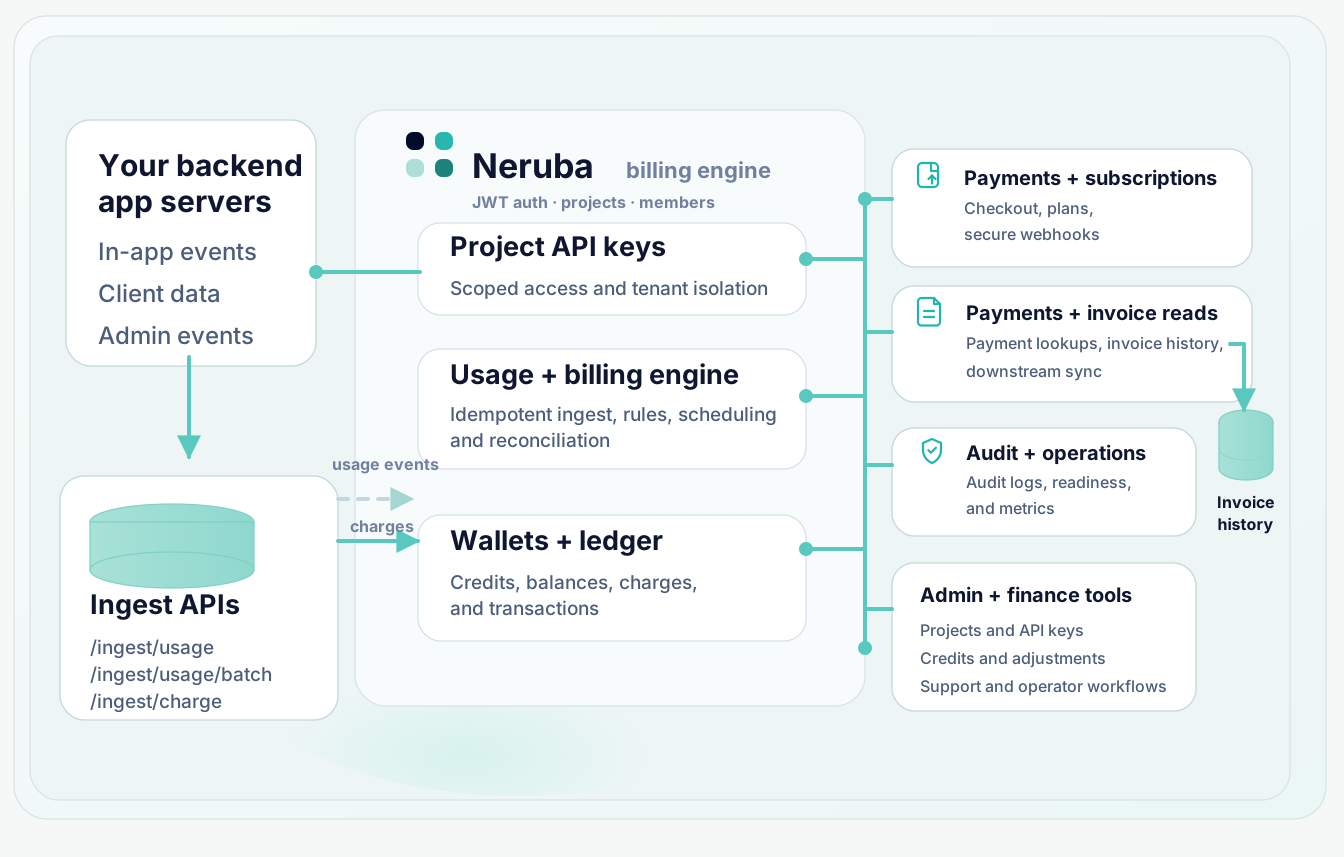
Neruba is strongest when billing is already an operating problem. The product and API already expose the surfaces most teams need to review early: replay-safe ingest, deterministic billing runs, ledger-backed balances, secure webhook handling, and a clear path through launch and recovery.
Projects, memberships, invites, and project API keys give teams a clean tenant boundary before live usage begins.
The API already ships single-event usage, batch usage, and charge ingest endpoints with idempotency and duplicate handling built into the contract.
Wallet balances, credit grants and revokes, ledger reads, and billing logs keep finance and support work tied to an understandable system of record.
Health, readiness, metrics, Swagger/OpenAPI gating, MySQL/MariaDB deployment paths, and release tooling make go-live preparation more concrete.
1) Capture product and lifecycle events
Append-only ingestion with dedupe and idempotency keys keeps billing inputs traceable and replay-safe across retries, imports, and backfills.
2) Compute charges deterministically
Rate across pricing rules and aggregation windows, then rerun billing safely when late events, disputes, or recovery passes require correction.
3) Produce finance-ready outputs
Produce billing outputs, reconcile with your PSP, apply credits and adjustments, and keep the audit trail understandable for finance and support.
Review the product where operational detail matters most
This is where the review becomes concrete: scoped API keys, replay-safe ingest, wallets and credits, scheduler behavior, reconciliation, deployment options, and the first integration path.
Tenant boundaries, project-scoped keys, and access layers that keep ingestion and billing isolated per customer environment.
Support prepaid models, ledgered credits, dispute adjustments, and traceable support interventions without losing the audit trail.
Scheduler locking, recovery tooling, consistency sweeps, and replay support help teams stay in control when billing needs correction under pressure.
Choose the problem in front of the team
Open the path that matches the billing problem in front of you: late events, pricing changes, or migration off Stripe Billing.
Usage billing with late events
Metering windows, delayed usage, and recomputation policies that should not create silent revenue drift.
Hybrid pricing changes
Subscriptions plus metered add-ons, credits, plan changes, rounding, and time-zone-aware proration.
Migration off Stripe Billing
Parallel runs, reconciliation artifacts, and a cleaner path from comparison to cutover planning.
Public proof is strongest when it points to concrete surfaces
Start with the pages that show real product and operating detail: shipped capabilities, implementation steps, runtime controls, and trust material.
Choose the proof surface that answers the next decision fastest
Open Solutions for scenario coverage, Compare when the direction is still open, Capabilities for the shipped surface, and bring your stack only when you want guidance tied to a real deployment or migration plan.
Late events, replay safety, and deterministic reruns are often the first thing teams need to settle.
Parallel validation, cutover planning, and stakeholder confidence decide the route for switching systems.
Private deployment, procurement, and security review change which material matters first.
Technical depth for teams that need confidence before launch
Free mini-course: Neruba Engineering Notes. Start with the core billing design lessons, then move into implementation and operations when the project needs product-level detail.
Ledger-first design
Why invoices are views and the ledger is the source of truth.
Idempotency that survives retries
Prevent double billing across APIs, queues, and webhooks.
Usage aggregation windows
Late events, backfills, and deterministic recomputation.
Need a lower-friction starting point?
Start with Engineering Notes when the team needs the core billing patterns first, then move into implementation or rollout planning when deployment, migration, or launch detail matters.
Use the API examples, implementation guide, and docs when the conversation moves into event design, rollout sequencing, deployment posture, and operational depth. Security and governance material is ready when more stakeholders join.
A compact review surface up front, with deeper material one level down
Enough signal to keep the project moving, with implementation, operations, trust, and security detail available as soon as more stakeholders are involved.
Correctness and auditability
- Ledger-first records — invoices are deterministic views
- Idempotent operations — safe retries for money-moving APIs
- Deterministic recomputation — backfills and late events
Webhook hardening
- Signature verification — reject forged events
- Dedupe + replay protection — at-least-once delivery
- Retry + reprocessor path — no lost transitions
Data handling
- Data minimization — store only what you need to bill
- Retention and deletion hooks — support customer requirements
- Encryption — TLS in transit; at-rest via DB/storage
Bring the stack details that matter and skip a generic discovery loop
Use this path when billing requirements, migration questions, or deployment constraints are already real and you want the response grounded in your current setup.
Request guidance tailored to your environment
Share the essentials of your pricing model, deployment posture, and rollout context so the response can start from your environment.
- Private cloud workspace
- Implementation brief aligned to your pricing model
- Migration, rollout, and deployment guidance when relevant
- • Current provider or in-house stack
- • Pricing model: subscription, usage, hybrid, or credits
- • Deployment preference: private deployment or self-hosted
- • The edge cases you want answered first
- 1) We prepare the response around your pricing model, deployment posture, and timeline.
- 2) You land on a confirmation page immediately after submission.
- 3) A private cloud workspace arrives by email, with optional live follow-up when helpful.
- • Private cloud workspace designed for engineering, finance, and security stakeholders
- • Automatic routing based on your billing model, deployment needs, and timeline
- • No source-code handoff in the standard path
Choose this path when the project already has concrete billing requirements and you want the next response shaped around your environment.
Can we handle late events, reruns, migrations, and webhook retries without creating revenue drift?
Will invoices stay explainable, reconcilable, and consistent when plans change mid-cycle or usage arrives late?
Can we confirm deployment model, controls, retention, and audit expectations without slowing the project down?
Common questions before you request a rollout review
These are the questions teams usually want answered before they commit implementation time or involve more stakeholders.
Do we need a meeting before we move forward?
What should we include in the request?
Can we validate a migration before we commit?
Do you share source code as part of the process?
Neruba Engineering Notes
A concise technical sequence on usage billing, idempotency, webhooks, proration, and migrations for teams that want the core patterns first.